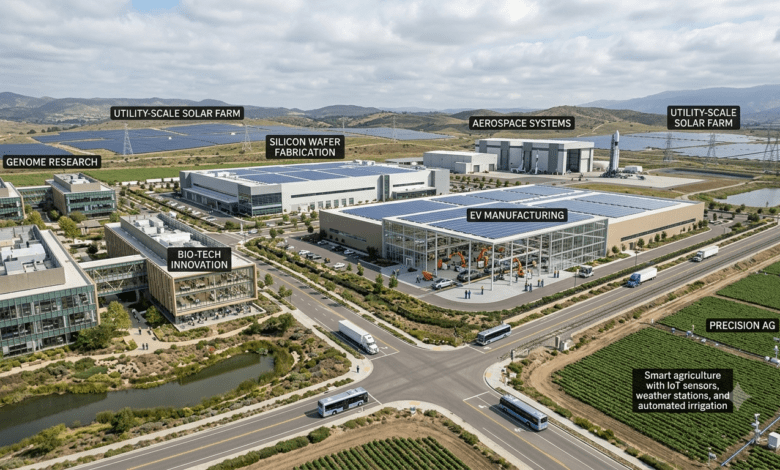
The engine of the United States economy is undergoing a structural transformation. For decades, broad-based consumer spending, financial engineering, and software platforms anchored domestic expansion. However, a combination of changing global trade dynamics, historic federal legislative investments, and rapid breakthroughs in physical and digital infrastructure is shifting economic momentum toward deep technology, domestic industrial capacity, and energy resilience.
As capital reshapes enterprise operations, the primary industries driving US economic growth are no longer limited to purely digital consumer platforms. Instead, growth is concentrated at the intersection of capital-intensive manufacturing, energy infrastructure, high-tech supply chain re-shoring, and advanced automation. Understanding how these critical sectors interact provides a clear view of America’s future economic landscape.
1. Artificial Intelligence and Advanced Technology
Artificial intelligence (AI) has transitioned from an experimental software capability to a macroeconomic growth catalyst. Rather than operating in isolation, AI acts as a foundational technology that enhances productivity across almost every industrial vertical.
┌─────────────────────────────────────────────────────────────────┐
│                    THE AI PRODUCTIVITY CYCLE                    │
│                                                                 │
│   Hyperscale Capital Investment  ──►  Digital Infrastructure     │
│             ▲                               │                   │
│             │                               ▼                   │
│   Enterprise Automation         ◄──  Advanced Model Deployment  │
└─────────────────────────────────────────────────────────────────┘
Growth Drivers and Enterprise Adoption
The current cycle is powered by massive enterprise software investment and capital expenditure (CapEx) from major technology firms. Enterprise adoption is shifting toward specialized AI agents, natural language processing for automated operations, and generative models designed to streamline workflow friction.
Economic Impact on Labor and Capital
While concerns about structural job displacement persist, AI investments continue to spark hiring demand for machine learning engineers, data architecture specialists, and tech-integration project managers. Productivity gains across professional services, logistics, and research environments are projected to expand total gross domestic product (GDP) margins over the coming decades.
Structural Challenges
-
Energy Consumption: High-density computational clusters consume vast amounts of electricity, stretching regional grids.
-
Capital Intensity: The massive upfront expense required to build and train frontier models threatens smaller tech firms that lack enterprise scale.
-
Safety and Reliability: Mitigating model hallucination and managing system security remain paramount for broader enterprise integration.
2. Semiconductor and Chip Manufacturing
Semiconductors form the core foundation of modern technical sovereign capability. Historically reliant on overseas fabrication facilities, the U.S. is executing a rapid effort to re-shore silicon manufacturing.
Federal Catalysts and Supply Chain Security
Driven by public-private co-investment structures—most notably through the CHIPS and Science Act—billions of dollars in direct capital subsidies and tax credits are financing greenfield semiconductor fabs in states like Arizona, Texas, New York, and Ohio. Reshoring production insulates domestic hardware developers from foreign supply disruption risks.
Regional Job Creation and Ecosystem Multipliers
Modern semiconductor fabrication plants require an extensive local supporting network. Beyond direct hiring for cleanroom technicians and process engineers, fab development drives substantial secondary job growth in chemical processing, specialized HVAC engineering, continuous precision logistics, and regional construction.
       CHIPS Act Incentives & Private Investment ($280B+)
                               │
            ┌──────────────────┴──────────────────┐
            ▼                                     ▼
 Direct Fab Construction               Local Ecosystem Spinoffs
(Technicians, Cleanrooms)          (Chemicals, Tooling, Materials)
Potential Market Bottlenecks
-
Specialized Talent Gaps: The U.S. faces a shortage of specialized microelectronics technicians and electrical engineering graduates.
-
Construction Lead Times: High capital costs and regulatory reviews can extend timeframes from ground-breaking to commercial production.
3. Clean Energy and Renewable Power Generation
The modernization of the U.S. power grid is driven by surging commercial energy demand from high-density computation centers, industrial re-shoring, and transport electrification.
Expansion Drivers: Utility-Scale Solar, Wind, and Storage
Utility-scale solar installations, onshore/offshore wind farms, and utility battery energy storage systems (BESS) are receiving sustained private and public investment. Grid operators are prioritizing utility-scale battery integration to stabilize intermittent power feeds and manage peak energy demands effectively.
                        SURGING POWER DEMAND
                                 │
     ┌───────────────────────────┼───────────────────────────┐
     ▼                           ▼                           ▼
Data Centers              Industrial Fabs             Fleet Electrification
     │                           │                           │
     └───────────────────────────┼───────────────────────────┘
                                 │
                                 ▼
                    CLEAN ENERGY INFRASTRUCTURE
                  (Solar, Wind, Battery Storage)
Grid Modernization and Economic Scale
Renewable transition projects require extensive grid modernization, high-voltage transmission corridor builds, and smart-grid power routing software. Regional economies in the Midwest, Southwest, and Southeast are benefitting from high-capacity generation construction projects that bring high-wage engineering and technical operational roles.
Structural Constraints
-
Interconnection Delays: Long multi-year queues to connect new power plants to the regional transmission grid can stall commercial launch timelines.
-
Supply Constraints: Shortages of high-voltage transformers and specialized electrical gear create project delivery bottlenecks.
4. Electric Vehicles and Battery Manufacturing
The mobility sector is restructuring around high-capacity battery chemistry, powertrain efficiency, and localized manufacturing networks.
┌─────────────────────────────────────────────────────────────────┐
│                     BATTERY BELT EXPANSION                      │
│                                                                 │
│ Raw Material Inputs ──► Cathode/Anode Prep ──► Cell Fabrication │
│                                                      │          │
│ Commercial Fleets   ◄── Pack Integration   ◄─────────┘          │
└─────────────────────────────────────────────────────────────────┘
Industrial Investments in the “Battery Belt”
A concentrated industrial corridor stretching across the U.S. Midwest and Southeast has attracted billions in capital deployment for gigafactories. These plants manufacture lithium-ion and next-generation solid-state cell units for consumer passenger models, commercial transit, and industrial machinery.
Supply Chain Localization and Automation
Manufacturers are aggressively building out domestic processing loops for critical minerals, including cathode and anode preparation facilities. High-density automation in cell packaging keeps unit manufacturing costs competitive against global production hubs.
Main Market Risks
-
Charging Infrastructure Deficits: Slow deployment of high-speed public charging stations limits broader consumer adoption in non-urban markets.
-
Volatile Commodity Costs: Pricing fluctuations across raw battery metals like lithium, nickel, and cobalt complicate long-term production forecasting.
5. Healthcare, Biotechnology, and Life Sciences
Demographic shifts—specifically an aging population—coupled with rapid advances in genomic science make healthcare one of the largest structural economic drivers in North America.
Breakthrough Technologies and Bio-Manufacturing
Precision medicine, messenger RNA (mRNA) platforms, and CRISPR-based gene therapies are transforming traditional patient treatment paths. Furthermore, machine learning models are drastically shortening candidate selection timelines in early-stage drug discovery.
   Traditional R&D (6-8 Years)           AI Computational Discovery (1-2 Years)
┌──────────────────────────────┐        ┌──────────────────────────────┐
│  Lab Testing  ──►  Trial     │   VS   │  Predictive Modeling         │
│  Validation   ──►  Approval  │        │  Targeted Synthesis          │
└──────────────────────────────┘        └──────────────────────────────┘
Employment Resilience and Economic Impact
Healthcare remains an exceptionally stable source of employment growth across major metropolitan regions. Beyond medical centers, expanding regional biotechnology hubs generate strong demand for bio-process engineers, clinical trials management talent, and regulatory compliance experts.
Industry Hurdles
-
Development Costs: Bringing novel therapeutics from clinical trials to market approval requires vast upfront investment.
-
Systemic Cost Pressures: Aligning drug development pricing with broader public healthcare budget constraints remains a complex policy challenge.
6. Aerospace, Defense, and Autonomous Systems
Geopolitical dynamics are accelerating investment in advanced aerospace engineering, defense hardware manufacturing, and uncrewed aerial systems.
┌─────────────────────────────────────────────────────────────────┐
│                   AEROSPACE TECHNOLOGY TRIAD                    │
│                                                                 │
│       Autonomous Systems ──► Space & Satellite Payload          │
│              ▲                               │                  │
│              │                               ▼                  │
│              └────── High-Mach Powertrains ──┘                  │
└─────────────────────────────────────────────────────────────────┘
Modernization and Next-Generation Systems
Defense modernization priorities focus on sovereign satellite constellation networks, high-mach propulsion, autonomous surface vessels, and integrated air-defense networks. In commercial aerospace, demand for low-Earth orbit (LEO) satellite communications and next-generation passenger aircraft fleets remains robust.
Advanced Materials and Regional High-Tech Manufacturing
Aerospace manufacturing relies heavily on advanced composite materials, additive manufacturing (3D metal printing), and real-time flight control avionics. States with established defense research clusters benefit from high-wage aerospace engineering and technical manufacturing positions.
Growth Risks
-
Supply Chain Delays: Sourcing specialized defense-grade microchips, titanium components, and precision castings can lead to production delays.
-
Federal Procurement Timelines: Complex government acquisition cycles can slow down the commercial scaling of defense technologies.
7. Advanced Manufacturing and Industrial Automation
American industrial capacity is being rebuilt through digital automation, reducing reliance on low-cost labor markets overseas.
Smart Factories and Cobotics
Modern domestic manufacturing facilities integrate connected IoT sensor networks, predictive machinery diagnostics, and collaborative robots (cobotics) designed to work safely alongside human operators. This transition enables plants to maintain precise quality standards while accelerating throughput times.
                 TRADITIONAL VS. SMART FABRICATION

   Manual Quality Inspections      Real-Time Computer Vision
    Scheduled Maintenance    ──►  AI-Driven Predictive Repairs
   Fixed Tooling Systems          Flexible Reconfigurable Robotics
Impact on Productivity and Workforce Roles
Advanced automation increases output per labor hour while reshaping plant workforce requirements. Routine manual roles are evolving into technical system operators, PLC programmers, and robotics maintenance specialists who earn higher base wages.
Operational Constraints
-
High Capital Upfront: Upgrading legacy industrial plants to fully automated smart facilities requires substantial upfront funding.
-
Skills Gap: Finding technicians capable of maintaining complex hardware-software integration remains a constant challenge for industrial operators.
8. Data Centers and Digital Infrastructure
The explosion of compute-heavy enterprise applications has positioned digital infrastructure as a foundational utility for modern commerce.
Compute Infrastructure Expansion
Data center developers are building massive hyperscale infrastructure facilities across regional sub-markets. These campuses house high-density rack servers optimized for intensive workloads, distributed cloud architectures, and global network routing.
┌─────────────────────────────────────────────────────────────────┐
│              HYPERSCALE DATA CENTER INFRASTRUCTURE              │
│                                                                 │
│   High-Density Server Racks  ──► Liquid Cooling Systems         │
│              ▲                               │                  │
│              │                               ▼                  │
│   Smart Power Distribution   ◄── Direct Fiber Interconnects     │
└─────────────────────────────────────────────────────────────────┘
Regional Economic Contributions
While operational hyperscale sites employ relatively compact permanent staff teams, their initial construction phases drive high volumes of high-wage engineering, electrical, and HVAC trade activity. Furthermore, data centers yield long-term municipal tax revenue that helps fund local public infrastructure projects.
Scaling Bottlenecks
-
Power Grid Constraints: High-density data centers require dedicated sub-station capacity, creating load bottlenecks on regional power networks.
-
Thermal Management: Dissipating heat generated by high-density compute racks demands liquid cooling technologies and localized water-usage oversight.
9. Financial Technology and Business Services
Financial services are shifting away from traditional branch models toward automated payment routing, risk analytics platforms, and capital access networks.
Growth Drivers: Open Banking and Machine-Learning Risk Models
Enterprise adoption of open-banking APIs, real-time merchant settlement systems, and AI-driven underwriting models is transforming consumer banking and commercial lending. Automated credit scoring models enable faster underwriting reviews while lowering operational expenses.
┌─────────────────────────────────────────────────────────────────┐
│                    FINTECH OPERATING STACK                      │
│                                                                 │
│   Consumer Touchpoints (APIs) ──► Real-Time Settlement Engine   │
│              ▲                               │                  │
│              │                               ▼                  │
│   Embedded Finance Partners   ◄── Automated Risk Analytics      │
└─────────────────────────────────────────────────────────────────┘
Productivity Realignment in Professional Services
Beyond retail consumer applications, business-to-business (B2B) financial technology streamlines back-office accounting, treasury operations, and cross-border trade transactions. High-skill engineering, compliance, and product management jobs continue to cluster around primary financial centers and growing regional tech hubs.
Main Sector Vulnerabilities
-
Regulatory Oversight: Dynamic regulatory rules surrounding data privacy, cross-border financial routing, and AI-driven lending models introduce operational complexity.
-
Cybersecurity Exposure: Interconnected digital networks face persistent threats of high-level cyber intrusion and data loss.
10. Construction and Civil Infrastructure
National economic growth depends heavily on the physical networks that move power, cargo, data, and people. Federal infrastructure programs continue to drive large-scale capital projects across the country.
Mega-Projects and Civil Upgrades
Civil construction firms are currently executing major overhauls of bridges, deep-water ports, municipal water networks, public transit lines, and interstate freight corridors.
                      INFRASTRUCTURE CAPEX EXPANSION
                                    │
    ┌───────────────────────────────┼───────────────────────────────┐
    ▼                               ▼                               ▼
Deep-Water Ports & Rail        Interstate Freight Roads         Water Treatment Facilities
Materials Innovation and Heavy Equipment Tech
Construction teams are adopting low-carbon concrete formulations, modular off-site prefabrication, and GPS-guided autonomous heavy machinery to improve project timelines and lower site safety risks.
Sector-Wide Risks
-
Material Cost Volatility: Price shifts in structural steel, asphalt, and specialized insulation materials can pressure project budget margins.
-
Workforce Shortages: A shortage of skilled trade workers—including certified welders, electricians, and heavy machinery operators—can delay scheduled completions.
11. Agricultural Technology and Food Innovation
Faced with shifting global weather patterns, labor shortages, and changing resource availability, the domestic agriculture sector is turning to technology to protect yield efficiency.
┌─────────────────────────────────────────────────────────────────┐
│                    AGTECH INNOVATION CYCLES                     │
│                                                                 │
│   Autonomous Field Equipment ──► Real-Time Soil Sensor Grids    │
│              ▲                               │                  │
│              │                               ▼                  │
│   Controlled Indoor Farming  ◄── Gene-Edited Drought Seeds      │
└─────────────────────────────────────────────────────────────────┘
Precision Farming and Biotechnology
Modern farming relies on precision field sensors, satellite-guided autonomous tractors, targeted drone spraying, and gene-edited crops engineered to withstand temperature variations. Indoors, controlled-environment agriculture (CEA) facility projects are bringing crop production closer to major urban consumer centers.
Macro Economic Resilience and Export Capacity
AgTech adoption protects U.S. agricultural competitiveness globally while insulating domestic supply networks against crop loss shocks. The sector generates sustained demand for agricultural engineers, bio-scientists, and specialized hardware technicians across rural economic corridors.
Market Adoption Limits
-
High Equipment Costs: Upfront costs for high-tech farm equipment can limit rapid adoption among smaller independent farming operations.
-
Rural Connectivity Gaps: Incomplete high-speed rural broadband networks can hinder real-time data transmission for field IoT devices.
Macroeconomic Comparison: Impact Across Key Sectors
While these sectors drive overall market expansion, their economic characteristics vary across capital intensity, employment footprint, and productivity potential.
| Sector | Primary Growth Driver | Capital Intensity | Direct Job Creation Potential | Key Economic Risk |
| Artificial Intelligence | Enterprise Automation & Compute CapEx | High | Moderate (High Skill) | Grid Power Deficits / CapEx Bubble |
| Semiconductor Fabs | Federal Subsidies & Supply Reshoring | Very High | High (Direct & Indirect) | Specialized Labor Shortages |
| Clean Energy Infrastructure | Grid Modernization & Data Demand | High | High (Trade & Engineering) | Transmission Interconnection Queues |
| Electric Vehicles & Batteries | Battery Belt Industrial Investments | High | High (Assembly & Chemical) | Charging Infrastructure Gaps |
| Biotechnology & Healthcare | Aging Demographics & Precision Medicine | Moderate | Very High (Broad Spectrum) | Long R&D Cycles / Regulatory Costs |
| Aerospace & Defense | Defense Modernization & Autonomous Systems | Moderate | High (Technical & Trade) | Supply Chain Sub-Tier Bottlenecks |
| Advanced Manufacturing | Re-shoring & Industrial Robotics | High | Moderate (Specialized Tech) | Automation Skill Gaps |
| Data Centers | Cloud Workloads & AI Infrastructure | Very High | Low (Long-Term Operational) | Local Utility Grid Saturation |
| Financial Technology | API Integration & Machine-Learning Risk | Low | Moderate (Software & Regulatory) | Dynamic Regulatory Compliance |
| Civil Infrastructure | Federal Capital Allocations | High | High (Skilled Construction Trades) | Material Inflation & Trade Shortages |
| Agricultural Technology | Yield Optimization & Precision Equipment | Moderate | Moderate (Rural Technical) | Equipment Upfront Costs & Connectivity |
Economic projections remain subject to broader shifts in interest rate policies, energy costs, trade regulations, and global market stability. However, sectors combining heavy physical infrastructure deployment with high-level technology integration are positioned to account for a growing share of domestic GDP expansion.
Long-Term Outlook: Shaping America’s Economic Future
The U.S. economy is transitioning into an era defined by domestic capital investment, industrial modernization, and deep-technology adoption. Rather than relying on a single dominant sector, national expansion is increasingly sustained by an interconnected network: advanced semiconductor fabs supply the hardware required by artificial intelligence models, which run within high-density data centers powered by upgraded clean energy grids, while automated manufacturing facilities build the next generation of transport and aerospace hardware.
Navigating this transition successfully requires addressing key structural challenges—including energy grid capacity, specialized technical talent shortages, and persistent supply chain bottlenecks. How effectively public institutions and private enterprise address these constraints will determine the ultimate pace of expansion.
Ultimately, the industries driving US economic growth are building a more resilient, technologically advanced, and productive domestic economy equipped to maintain long-term global competitiveness.