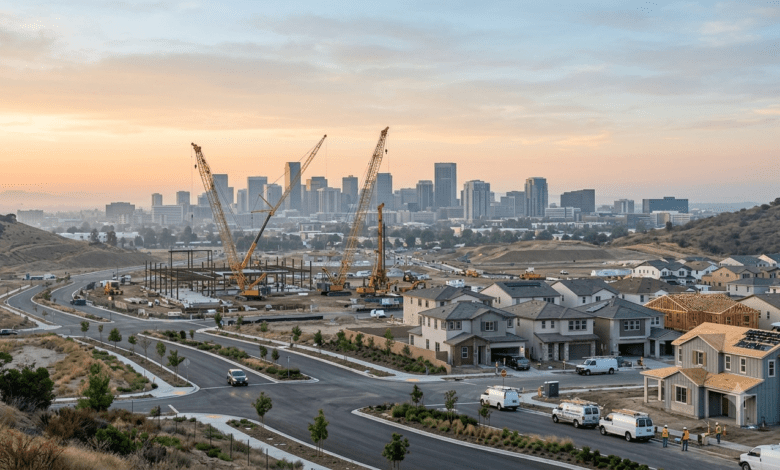
The urban map of the United States is undergoing a fundamental structural shift. Over the past decade, economic gravity, domestic migration patterns, and changing lifestyle priorities have reshaped where Americans choose to live, work, and build businesses. While legacy metropolises continue to anchor international commerce, dynamic growth has concentrated heavily across the Sun Belt, Mountain West, and rapidly expanding exurban rings.
This realignment is more than a simple headcount increase; it represents a comprehensive urban transformation. Cities that were once mid-sized regional hubs or rural outer-ring suburbs are evolving into bustling centers of innovation, advanced manufacturing, and commercial development. Understanding which cities are expanding—and analyzing the structural forces propelling their growth—offers a clear window into the future of American mobility, infrastructure, and real estate.
The Fastest-Growing American Cities: Regional Leaders and Exurban Dynamos
Urban growth in the U.S. manifests in two distinct ways: absolute numerical expansion within major metropolitan hubs, and high-percentage velocity in rapid-growth suburban and exurban corridors. According to recent demographic data from the U.S. Census Bureau, the South and West continue to capture the vast majority of net domestic migration gains.
+-------------------------------------------------------------------------------+
|                        U.S. URBAN GROWTH PATTERNS                             |
+---------------------------------------+---------------------------------------+
|   METROPOLITAN HUBS (Numeric Gain)    |    EXURBAN CORRIDORS (% Velocity)     |
|   * High volume of net additions      |   * Rapid percentage expansion        |
|   * Regional corporate anchors        |   * Master-planned developments       |
|   * Tech & financial hubs             |   * Outpacing core city infrastructure|
|   Examples: Charlotte, Fort Worth,    |   Examples: Celina (TX), Fulshear (TX)|
|             Austin, Phoenix           |             Princeton (TX)            |
+---------------------------------------+---------------------------------------+
Major Metropolitan Engines
Several core regional cities lead the nation in year-over-year population and job creation:
-
Charlotte, North Carolina: A primary beneficiary of East Coast migration, Charlotte has solidified its position as the nation’s second-largest banking center while aggressively expanding into financial technology, energy, and healthcare. The city consistently ranks among the top in the nation for net numeric additions, drawing young professionals from the Northeast.
-
Fort Worth and Dallas, Texas: The Dallas-Fort Worth metroplex remains one of the fastest-expanding megaregions in the developed world. Fort Worth recently crossed the 1 million population mark, driven by aviation manufacturing, logistics hubs, and aggressive residential land development.
-
Austin, Texas: Having crossed the 1 million population threshold, Austin has matured from a regional university town into a global technology powerhouse. Despite rising living costs, corporate relocations in software, clean energy, and hardware manufacturing continue to drive steady inflow.
-
Phoenix, Arizona: Capitalizing on its proximity to California, Phoenix has diversified its economy beyond hospitality and retirement real estate. The Valley of the Sun has emerged as a national center for advanced semiconductor manufacturing, logistics, and bio-health innovation.
-
Raleigh, North Carolina: Anchored by the Research Triangle, Raleigh combines strong job creation in biotechnology, software, and clinical research with high educational attainment and strong household income growth.
The Exurban Growth Explosion
While core metropolitan areas add sheer numbers, outer-ring suburban cities are registering the nation’s highest percentage growth rates. Cities like Celina, Fulshear, and Princeton in Texas have recorded annual growth spikes exceeding 15% to 25% as expansive farm counties transform into master-planned residential communities. Similar satellite growth is unfolding around Atlanta, Georgia; Tampa, Florida; and Salt Lake City, Utah.
What Is Driving Their Transformation?
The dramatic rise of these cities is not accidental; it is driven by a convergence of economic incentives, demographic shifts, and infrastructural policies.
+-------------------------------------------------------------------------------+
|                       PRIMARY URBAN GROWTH DRIVERS                            |
+-------------------------------------------------------------------------------+
| 1. Economic Diversification   --> Tech, bio-health, energy, & corporate headquarters |
| 2. Relative Affordability      --> Lower land costs & favorable tax structures   |
| 3. Demographic Preferences     --> Sunbelt migration & family-focused amenities   |
| 4. Work Flexibility            --> Hybrid schedules enabling exurban living      |
| 5. Pro-Growth Policies         --> Fast-track permitting & infrastructure investment|
+-------------------------------------------------------------------------------+
1. Job Creation and Business-Friendly Environments
Economic opportunity remains the single strongest catalyst for human migration. States across the Sunbelt and Mountain West often feature favorable tax structures—such as zero state income tax in Texas, Florida, and Nevada—alongside streamlined regulatory environments. Corporate headquarters and regional operations centers have migrated toward these regions, bringing high-paying positions in technology, finance, healthcare, and advanced manufacturing.
2. Demographic Realignment and Migration
The U.S. population is experiencing ongoing generational shifts. Millennials, now in their prime homebuying and family-building years, are prioritizing regions that offer single-family housing, strong public school districts, and family-oriented communities. Concurrently, retiring Baby Boomers continue to migrate toward warmer climates, fueling services, construction, and healthcare sectors in Sunbelt cities.
3. Relative Housing Affordability and Cost of Living
Although home prices have risen across fast-growing metros, cities in North Carolina, Texas, Tennessee, and Arizona still provide significantly more square footage per dollar compared to coastal coastal gateways like New York, San Francisco, or Boston. This cost differential gives middle-class families and relocating workers greater purchasing power.
4. Normalized Hybrid Work Patterns
The permanent integration of remote and hybrid work models has decoupled physical office attendance from residential location choices. Workers are no longer forced to live within tight commute radiuses of central business districts. Consequently, exurbs located 30 to 50 miles from major metropolitan cores have experienced historic residential demand.
5. Proactive Infrastructure and Real Estate Development
Fast-growing cities often feature local governments that support large-scale real estate development and private-public infrastructure projects. Municipalities that streamline land-use zoning and building permits enable developers to deliver new housing supply faster, preventing the extreme inventory bottlenecks seen in highly restrictive coastal markets.
How These Cities Are Being Transformed
Rapid population influx physically alters the urban canvas. Fastest-growing cities are actively redesigning their physical structures, moving away from legacy suburban models toward integrated urban centers.
Downtown Infrastructure and Adaptive Reuse
Cities across the Sunbelt are revitalizing historic central cores. Former industrial zones, warehouses, and surface parking lots are being replaced by high-density mixed-use developments, residential towers, micro-parks, and pedestrian-friendly dining corridors.
+-------------------------------------------------------------------------------+
|                     PHYSICAL URBAN TRANSFORMATION                             |
+-------------------+-------------------------------+---------------------------+
| DOWNTOWN CORE     | TRANSIT & CONNECTIVITY        | SUBURBAN TOWNS            |
| * Adaptive reuse  | * Highway widening            | * Master-planned hub sites|
| * Micro-parks     | * Bus Rapid Transit (BRT)     | * Walkable retail squares |
| * High-density    | * Multi-use trail networks    | * Integrated schools &    |
|   residential     |                               |   recreation zones        |
+-------------------+-------------------------------+---------------------------+
Infrastructure and Mobility Shifts
To keep pace with growth, rapidly expanding areas are undertaking major transportation overhauls. While highway expansion remains widespread, cities are increasingly investing in multi-modal transit options, including:
-
Bus Rapid Transit (BRT): Dedicated lane corridors providing efficient travel between suburban residential clusters and downtown employment centers.
-
Integrated Trail Networks: Extensive multi-use paved trails designed for alternative commuting, recreation, and pedestrian connectivity.
-
Airport Modernization: Comprehensive terminal expansions to support increased commercial flights and regional logistics demand.
Suburban Civic Hubs
Modern exurbs are moving away from traditional bedroom community design. Outer-ring suburban municipalities are constructing walkable town squares, civic performance centers, and localized commercial hubs. This shift ensures residents can live, work, dine, and access healthcare services without commuting to the central city.
The Challenges of Rapid Growth
Unprecedented population expansion presents complex urban planning obstacles. Without careful management, rapid success can strain municipal resources and diminish quality of life.
Housing Pressures and Rising Affordability Gaps
When population growth outpaces housing completions, home prices and rents escalate rapidly. Longtime local residents often face rising property taxes and housing costs, leading to affordability constraints for essential service workers, including teachers, first responders, and municipal employees.
Traffic Congestion and Infrastructure Strain
Roadways, water lines, sewage systems, and electrical grids designed for smaller populations can quickly reach capacity. Traffic congestion frequently outpaces transportation improvements, resulting in longer commutes and increased wear on local roads.
Environmental and Natural Resource Stress
Rapid land conversion displaces natural habitats and creates large expanses of impervious surfaces, increasing urban heat island effects and stormwater runoff challenges. In arid regions across the West and Southwest, population growth places significant demands on regional water sources.
+-------------------------------------------------------------------------------+
|                      KEY RISKS OF UNCHECKED URBAN GROWTH                      |
+-------------------------------------------------------------------------------+
| [!] Affordability Displacement: Rapid valuation increases price out workforce. |
| [!] Infrastructure Bottlenecks: Congestion and utility load exceed capacity.  |
| [!] Environmental Pressures: Water rights friction and rapid land consumption. |
+-------------------------------------------------------------------------------+
Comparing Growth Profiles: Metropolitan vs. Exurban Growth
To understand how urban growth operates across different scales, consider how major regional engines compare to fast-expanding exurban communities:
| Dimension | Major Regional Engines (e.g., Charlotte, Phoenix, Austin) | Fast-Expanding Exurbs (e.g., Celina, Fulshear, Princeton) |
| Primary Growth Metric | Large numeric volume additions | High percentage expansion rates |
| Economic Drivers | Corporate HQs, tech, healthcare, global finance | Construction, local service markets, remote work |
| Housing Typology | High-density apartments, urban infill, townhomes | Master-planned single-family neighborhoods |
| Infrastructure Focus | Multi-modal transit, airport expansion, utility upgrades | New arterial roads, water plants, public schools |
| Main Challenges | Core housing affordability, urban displacement | Grid capacity, emergency services, loss of rural land |
The Future Outlook for Fast-Growing Metros
The long-term sustainability of today’s fastest-growing cities will depend on their ability to manage expansion effectively. Cities that invest proactively in infrastructure, balance housing supply with demand, and protect natural resources are well-positioned to maintain steady economic growth.
+-------------------------------------------------------------------------------+
|                   FUTURE DETERMINANTS OF URBAN SUCCESS                        |
+-------------------------------------------------------------------------------+
|  SUSTAINED GROWTH FACTORS                 RISK COUNTER-FORCES                 |
|  [+] Proactive housing construction       [-] Severe infrastructure bottlenecks|
|  [+] Strategic public-private transit     [-] Accelerating living costs       |
|  [+] Diverse, multi-sector economies      [-] Resource scarcity (water/power) |
+-------------------------------------------------------------------------------+
Over the coming decade, urban growth will likely become more nuanced. While the initial wave of post-pandemic migration was driven by immediate cost-of-living advantages, long-term retention will require vibrant cultural amenities, resilient public utilities, high-performing educational systems, and sustainable long-term urban planning.