The U.S. Destinations Travelers Are Discovering Beyond the Traditional Hotspots

For decades, the standard American vacation blueprint remained virtually unchanged. International visitors and domestic travelers alike routinely funneled into a familiar cluster of iconic gateways: standard trips to New York City, weekend getaways to Las Vegas, theme park marathons in Orlando, or coastal drives through Los Angeles and San Francisco.
However, travel behaviors across North America have experienced a distinct structural shift. Today’s travelers are increasingly looking beyond famous tourist hubs, seeking out emerging U.S. destinations that offer authentic character without the intense congestion. Rather than queuing for hours at predictable landmarks, modern road-trippers and jet-setters are favoring regional culture, native biodiversity, distinct regional foodways, and walkable small-to-midsize cities.
Why Travelers Are Looking Beyond Traditional U.S. Hotspots
The migration away from traditional U.S. tourist centers is driven by shifting priorities and changing travel economics. According to data from the U.S. Travel Association and domestic travel sector reports, high-density metropolitan areas have seen growing pushback from travelers fatigued by sky-high room rates, long wait times, and environmental overtourism.
Several key factors are accelerating the popularity of secondary and tertiary destinations:
-
Overtourism and Congestion: Major metropolitan hotspots often leave visitors feeling like numbers in a crowd. Alternative destinations offer room to breathe, easy parking, and relaxed itineraries.
-
Search for Regional Authenticity: Travelers increasingly value places with an undisturbed sense of identity—where local hardware stores, family-owned diners, and community art centers haven’t been displaced by global chain stores.
-
Affordability and Financial Value: Budget-conscious travelers are realizing their money stretches significantly further in midsize cities. Dining, boutique accommodation, and local activities often cost a fraction of what they would in tier-one metro markets.
-
Nature and Outdoor Access: Modern itineraries prioritize immediate proximity to hiking, waterways, and natural parks. Many emerging hubs sit right on the doorstep of wild spaces.
-
Work-from-Anywhere Flexibility: The rise of hybrid work allows professionals to turn 3-day weekend trips into week-long stays, favoring smaller cities with strong Wi-Fi networks and active coffee shop cultures.
U.S. Destinations Travelers Are Discovering
From mountain plateaus to rust-belt coastlines, these eight destinations represent the compelling alternatives reshaping North American travel.
1. Greenville, South Carolina
A Culinary and Park-Centric Alternative to Savannah and Charleston
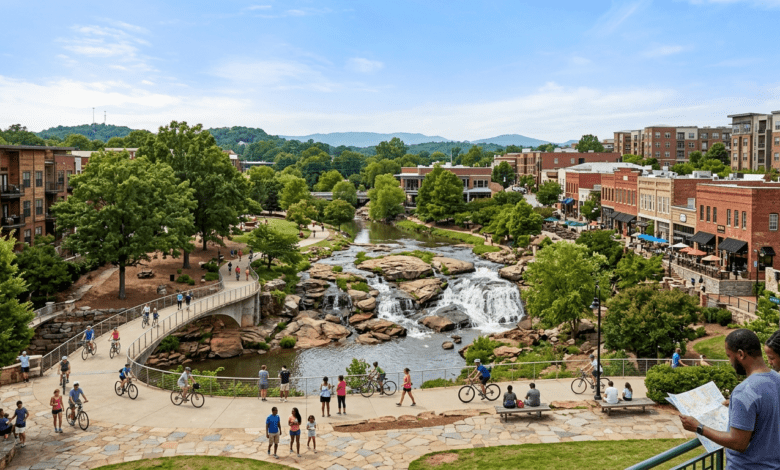
[Greenville, SC: Downtown River Park]
Greenville has quietly transformed into one of the Southeast’s most appealing urban destinations. Located at the foothills of the Blue Ridge Mountains, it trades the humid coastal crowds of Charleston and Savannah for a tree-lined main street anchored by Falls Park on the Reedy.
-
What Makes It Stand Out: Its downtown core features a curved pedestrian suspension bridge overlooking natural waterfalls right in the middle of town.
-
Key Experiences: Walk or bike along the 22-mile Swamp Rabbit Trail, visit local independent bookstores, or explore the museum housing extensive collections of American art.
-
Food & Culture: The downtown boasts over 100 independent restaurants within a walkable radius, featuring elevated Southern cuisine, farm-to-table small plates, and regional craft breweries.
-
Best For: Foodies, couples, and urban nature lovers seeking a relaxed Southern getaway.
-
Best Time to Visit: Spring (April–May) for blooming gardens or Autumn (October–November) for crisp foliage.
2. Santa Fe, New Mexico
A Heritage and Arts Alternative to Scottsdale and Sedona
As the oldest capital city in the United States, Santa Fe provides a rich cultural landscape grounded in Indigenous, Hispanic, and Anglo histories. While nearby Southwestern hubs have seen extensive residential growth, Santa Fe maintains strict adobe architectural standards and a slow-paced lifestyle.
-
What Makes It Stand Out: Earth-toned pueblo-style buildings set against the Sangre de Cristo Mountains, offering an authentic blend of ancient heritage and high-desert landscape.
-
Key Experiences: Explore the historical Santa Fe Plaza, tour the Georgia O’Keeffe Museum, or immerse yourself in the interactive art installations at Meow Wolf.
-
Food & Culture: Famous for green and red chile-infused New Mexican cuisine. Sampling local blue-corn enchiladas and visiting traditional chocolate elixirs houses are essential stops.
-
Best For: Art lovers, history enthusiasts, wellness seekers, and cultural travelers.
-
Best Time to Visit: September to November, when temperatures are comfortable and the aspen trees turn golden.
3. Chattanooga, Tennessee
An Outdoor Adventure Alternative to Asheville
Nestled along a dramatic bend of the Tennessee River, Chattanooga has re-engineered itself from an industrial town into an eco-friendly outdoor hub. It delivers immediate access to world-class rock climbing, mountain biking, and river sports.
-
What Makes It Stand Out: A city designed around outdoor recreation, connected by a long pedestrian bridge across the Tennessee River.
-
Key Experiences: Hike Lookout Mountain, kayak directly through downtown waterways, and explore the Tennessee Aquarium.
-
Food & Culture: A relaxed mountain vibe with refurbished warehouse districts featuring artisanal coffee roasters, distilleries, and Southern barbecue joints.
-
Best For: Active families, trail runners, climbers, and weekend adventurers.
-
Best Time to Visit: May through October for prime water and trail conditions.
4. Spokane, Washington
A Pacific Northwest Creative Alternative to Seattle
Located in Eastern Washington near the Idaho border, Spokane captures the pine-scented aesthetic of the Pacific Northwest without the constant gridlock of Seattle.
-
What Makes It Stand Out: Spokane Falls—a series of roaring waterfalls running right through the heart of the downtown park district.
-
Key Experiences: Ride the skyride over the falls in Riverfront Park, explore the historic Davenport Hotel, or taste your way through the local urban winery circuit.
-
Food & Culture: A burgeoning craft beverage market paired with farm-fresh inland agriculture, Northwest farm-to-table dining, and indie arts venues.
-
Best For: Budget-conscious Northwest explorers, craft beverage fans, and road-trippers.
-
Best Time to Visit: Summer (July–September) for warm weather and festival season.
5. Duluth, Minnesota
A Freshwater Coastal Alternative to Ocean Resorts
Situated along the rugged North Shore of Lake Superior, Duluth offers ocean-scale waterfront scenery with Midwestern hospitality. It serves as the gateway to Minnesota’s wild lakes and boreal forests.
-
What Makes It Stand Out: The iconic Aerial Lift Bridge spanning the harbor entrance, set against the backdrop of the largest freshwater lake in the world by surface area.
-
Key Experiences: Watch massive freighter ships enter Canal Park, hike along the Superior Hiking Trail, or drive the North Shore Scenic Byway.
-
Food & Culture: Maritime heritage meets rugged outdoor culture; think smokehouses offering wild-caught fish, cozy taprooms, and cideries.
-
Best For: Outdoor purists, maritime history buffs, and autumn leaf-peepers.
-
Best Time to Visit: Late summer for lake activities, or mid-September to early October for autumn colors.
6. San Luis Obispo, California
A Laid-Back Coastal Alternative to Los Angeles and Santa Barbara
Halfway between Los Angeles and San Francisco along California’s Central Coast lies San Luis Obispo (SLO). It trades congested coastal highways for rolling oak-covered hills, nearby vineyards, and uncrowded beaches.
-
What Makes It Stand Out: A historic mission downtown surrounding a flowing creek, completely devoid of high-rise developments.
-
Key Experiences: Visit the historic Mission San Luis Obispo de Tolosa, hike Bishop Peak for panoramic valley views, and soak in nearby natural hot springs.
-
Food & Culture: Embedded in Central Coast wine country (Edna Valley), SLO focuses heavily on sustainable ranching, organic agriculture, and Thursday night street markets.
-
Best For: Wine enthusiasts, couples, and road-trippers looking for classic California minus the traffic.
-
Best Time to Visit: Year-round; April to May and September to November offer ideal weather.
7. Buffalo, New York
An Architectural and Cultural Alternative to New York City
Buffalo has undergone a remarkable urban renaissance over the past decade. Instead of trying to mimic larger coastal metros, the city has leaned into its rich industrial heritage, landmark architecture, and distinct neighborhood pride.
-
What Makes It Stand Out: World-class 19th- and 20th-century architecture designed by Frank Lloyd Wright, Louis Sullivan, and Frederick Law Olmsted.
-
Key Experiences: Tour Wright’s Martin House, explore the modernized Buffalo AKG Art Museum, and visit the revitalized Canalside waterfront.
-
Food & Culture: Far beyond its famous chicken wings, Buffalo features a vibrant local dining scene, historic pub culture, and diverse immigrant-run eateries.
-
Best For: Architecture enthusiasts, art lovers, and history buffs seeking high value.
-
Best Time to Visit: June through September for pleasant weather, patio dining, and waterfront events.
8. Bentonville, Arkansas
An Arts and Cycling Alternative to Mountain Resorts
Once a quiet Ozark town, Bentonville has developed into a national focal point for world-class American art and trail cycling.
-
What Makes It Stand Out: The seamless integration of high-caliber art museums with hundreds of miles of singletrack mountain bike trails starting right from the town square.
-
Key Experiences: Tour the Crystal Bridges Museum of American Art, ride the Slaughter Pen trail network, and explore the Momentary contemporary arts space.
-
Food & Culture: High-end culinary concepts, third-wave coffee shops, and cycling-centric cafes line the historic downtown square.
-
Best For: Mountain bikers, contemporary art fans, and unexpected weekend getaways.
-
Best Time to Visit: Spring (March–May) and Autumn (October–November).
Alternative Destinations at a Glance
| Destination | Major Hotspot Alternative To | Standout Feature | Ideal Traveler Type |
| Greenville, SC | Charleston / Savannah | Urban waterfall park & walkable downtown | Foodies & couples |
| Santa Fe, NM | Sedona / Scottsdale | Pueblo architecture & high-desert art scene | Art & culture enthusiasts |
| Chattanooga, TN | Asheville | Riverfront access & urban mountain sports | Outdoor adventurers & families |
| Spokane, WA | Seattle | Downtown waterfalls & craft beverage trail | Northwest explorers & budget travelers |
| Duluth, MN | East Coast Lake Resorts | Lake Superior shoreline & maritime shipping | Nature lovers & road-trippers |
| San Luis Obispo, CA | Los Angeles / Santa Barbara | Central Coast vineyards & historic creek-side core | Couples & wine lovers |
| Buffalo, NY | New York City | Historic architecture & AKG Art Museum | Architecture & history buffs |
| Bentonville, AR | Aspen / Park City | World-class art museum & urban trail network | Cyclists & contemporary art fans |
How to Choose the Right Alternative Destination
Selecting an off-the-beaten-path destination depends on matching your personal trip goals with regional strengths:
-
By Budget: Destinations like Buffalo, Spokane, and Chattanooga offer significantly lower average hotel rates and dining expenses compared to primary coastal cities.
-
By Travel Style: If your priority is active outdoor recreation, look to Chattanooga or Bentonville. If you prefer museum hopping and fine dining, Santa Fe and Buffalo provide top-tier cultural itineraries without dense urban crowds.
-
By Season: Southern and high-desert spots like Greenville and Santa Fe excel during shoulder seasons (Spring/Fall). Duluth and Spokane shine brightest during mid-summer when outdoor trails and lakes are fully open.
-
By Trip Duration: Compact cities with strong downtown cores (like San Luis Obispo or Greenville) make ideal 3-day weekend trips, while regions with surrounding state/national parks (like Santa Fe) support immersive 7-to-10-day road trips.
The Future of U.S. Travel Beyond the Major Hotspots
As domestic and international travelers become more discerning, regional travel infrastructure continues to adapt. Regional airports are expanding flight routes, smaller cities are investing heavily in public green spaces, and local hospitality groups are opening boutique hotels that highlight local architecture.
This redistribution of tourism benefits both the traveler and the host community. Visitors enjoy lower costs, fewer crowds, and more authentic interactions. Meanwhile, local economies gain sustainable commerce without suffering from the strain of overtourism.
Choosing an alternative U.S. destination isn’t about compromising on your trip—it is about discovering places where local character, culture, and nature still take center stage. On your next trip, consider swapping the standard tourist line for a new horizon.